Sister Cars: Vehicles That Secretly Share the Same Parts
Automakers share platforms and rebadge cars, so the part you need may sit on a different badge entirely. Here are the sister cars worth searching.
Article image
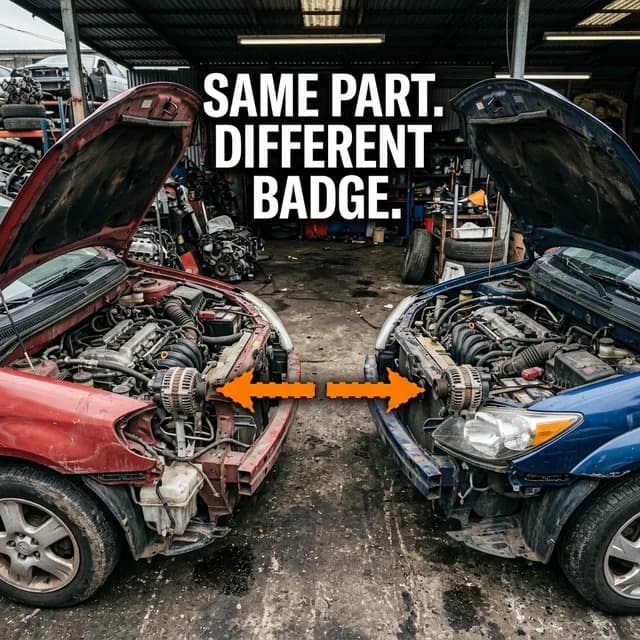
Direct answer: When your exact year and model isn’t in the yard, a sister car often carries the identical part. Automakers share platforms and rebadge the same vehicle under different brands to cut costs, so a Pontiac Vibe and a Toyota Matrix, or a Chevy Silverado and a GMC Sierra, share huge numbers of parts. Learn the twins and platforms and you double or triple your donor options overnight.
Sister Cars: Vehicles That Secretly Share the Same Parts from U-Pull-It.
Platform siblings share engines, suspensions, and interiors across brands.
Search by the sister vehicle when your exact model isn’t in inventory.
Always verify connectors, casting numbers, and option codes before pulling.
Engine families like GM LS and Honda K24 span many models and years.
Video: Starting Your Side Hustle | Used Auto Parts to Flip | Pt. 1
What are sister cars and rebadged twins?
A rebadged twin is the same vehicle sold under two brands, often with only badges and trim differing. A platform sibling shares the underlying architecture, engine, and many components without being identical. Both dramatically widen your donor pool because a part designed for one is engineered to fit the other.
Pontiac Vibe = Toyota Matrix (same factory, shared parts)
Chevy Silverado 1500 = GMC Sierra 1500 (near-identical)
Ford Fusion = Lincoln MKZ = Mercury Milan (shared CD platform)
Search inventory for every sibling, not just your exact model. If you need an alternator for a Honda Accord 2.4L, a TSX, CR-V, or Element with the K24 engine may carry the same unit. Bring your old part, and match casting numbers and connectors before you commit, because a shared platform still has trim-level variations.
Which shared parts are the safest bets?
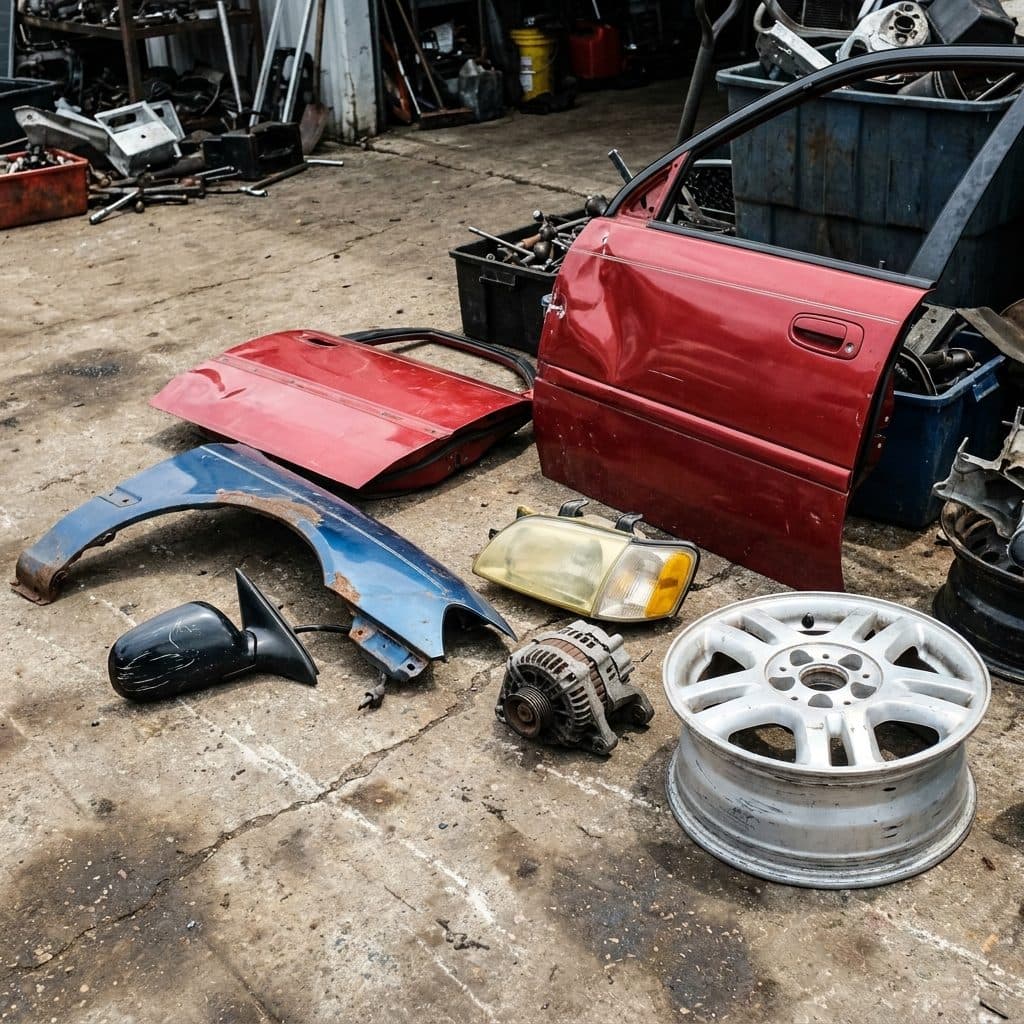
Body panels, glass, mirrors, interior trim, and bolt-on accessories interchange most reliably between twins. Engines and transmissions interchange within a family but demand VIN-digit and option verification. Electronics and modules can require programming, so confirm part numbers and return policy before buying those.
Quick-reference tables
Common rebadged twins that share parts
Vehicle
Sister vehicle(s)
Notes
Chevy Silverado 1500
GMC Sierra 1500
Near-identical; verify trim/bed
Toyota Matrix
Pontiac Vibe
Same platform + engine (1ZZ/2ZZ)
Ford Fusion
Lincoln MKZ, Mercury Milan
Shared CD3/CD4 platform
Chevy Tahoe
GMC Yukon, Cadillac Escalade
GMT900/K2XX platform
Dodge Charger
Chrysler 300, Dodge Challenger
LX/LD platform
Subaru Legacy
Subaru Outback
Shared drivetrain + suspension
Engine families that span multiple models
Engine
Models that share it
GM LS V8
Silverado, Tahoe, Camaro, Corvette, Trailblazer
Honda K24
Accord, CR-V, TSX, Element
Toyota 2GR-FE V6
Camry, Highlander, Sienna, RAV4 V6, Venza
Chrysler 5.7 HEMI
Ram 1500, Charger, Challenger, Durango, Grand Cherokee
Nissan VQ35
350Z, Altima V6, Maxima, Murano, Pathfinder
Field checklist
Step 1: Identify your platform and the sister vehicles that share it
Step 2: Search yard inventory for every sibling, not just your model
Step 3: Confirm the engine family and 8th VIN digit for drivetrain parts
Step 4: Compare casting numbers, connectors, and bolt patterns
Step 5: Check option codes (AWD, tow, premium audio) on the door jamb
Step 6: Bring your old part for a side-by-side before pulling
Primary keywordcars that share parts
Related searches
sister cars
rebadged cars
platform sharing parts
interchangeable donor vehicles
Frequently asked questions
What are sister cars?
Sister cars are vehicles that share a platform or are rebadged versions of the same car, so they use many identical parts. Searching sister cars widens your junkyard donor pool.
Do GMC and Chevy trucks share parts?
Yes. The Chevy Silverado 1500 and GMC Sierra 1500 are near-identical trucks that share the vast majority of mechanical and body parts, though you should verify trim and bed differences.
Can I use a part from a different brand?
Often, yes, when the vehicles share a platform. Verify casting numbers, connectors, bolt patterns, and option codes, and confirm the engine code for drivetrain parts.
Are rebadged car parts always interchangeable?
Body and trim parts usually interchange cleanly between twins, but electronics and drivetrain parts can vary by trim or require programming, so verify part numbers first.