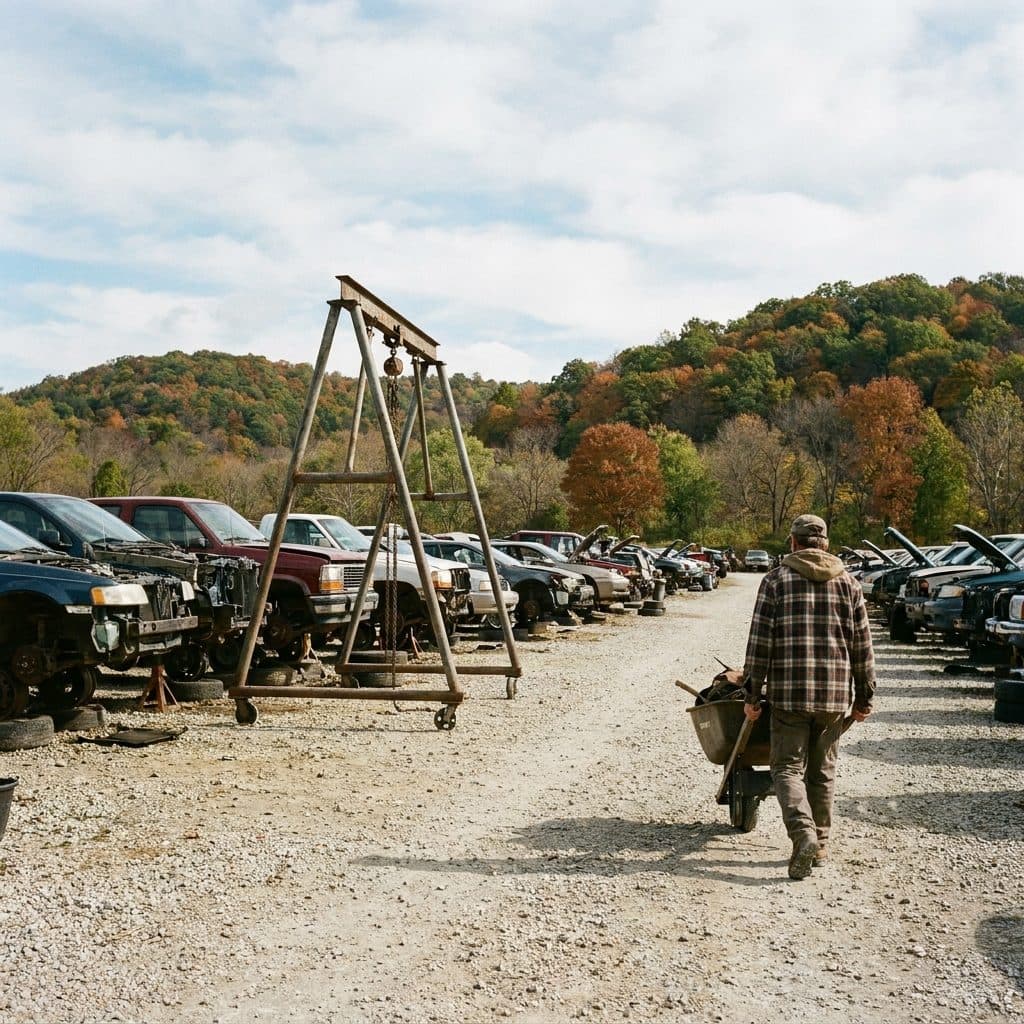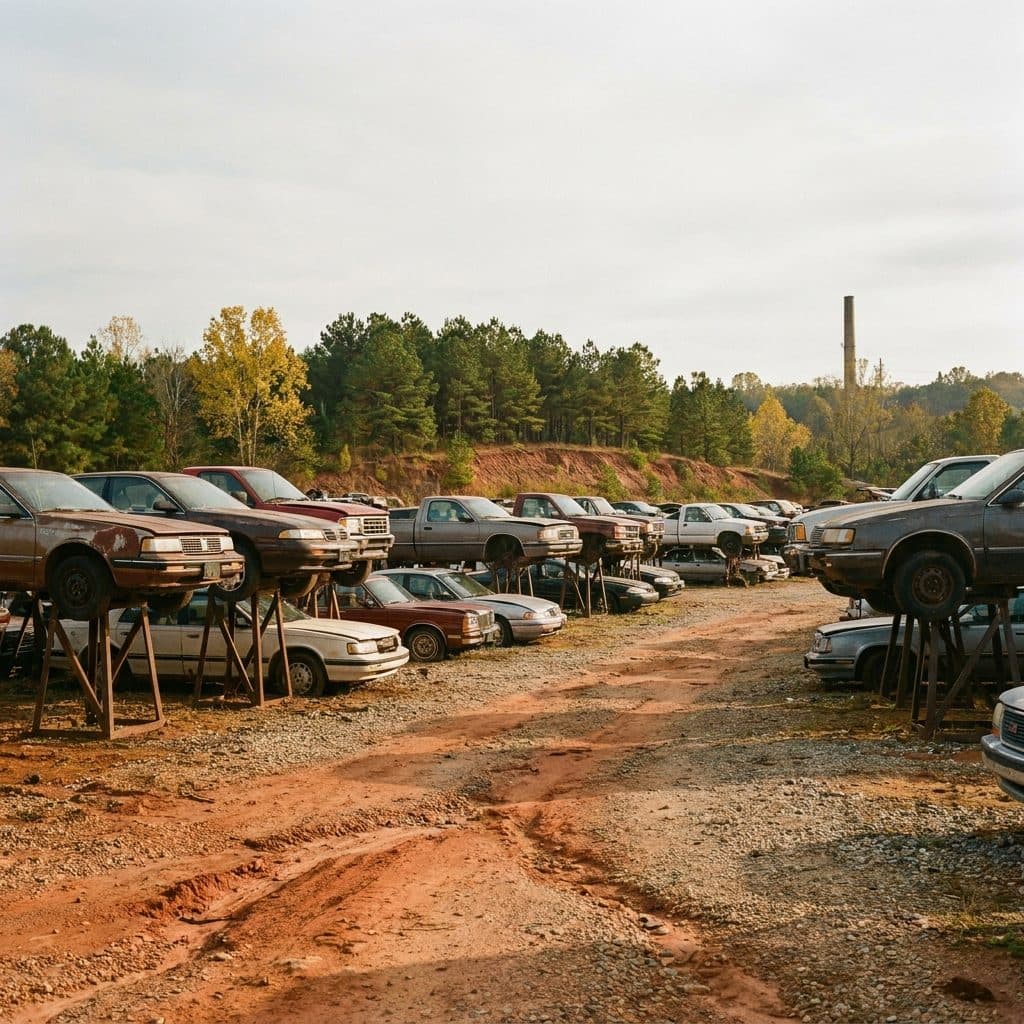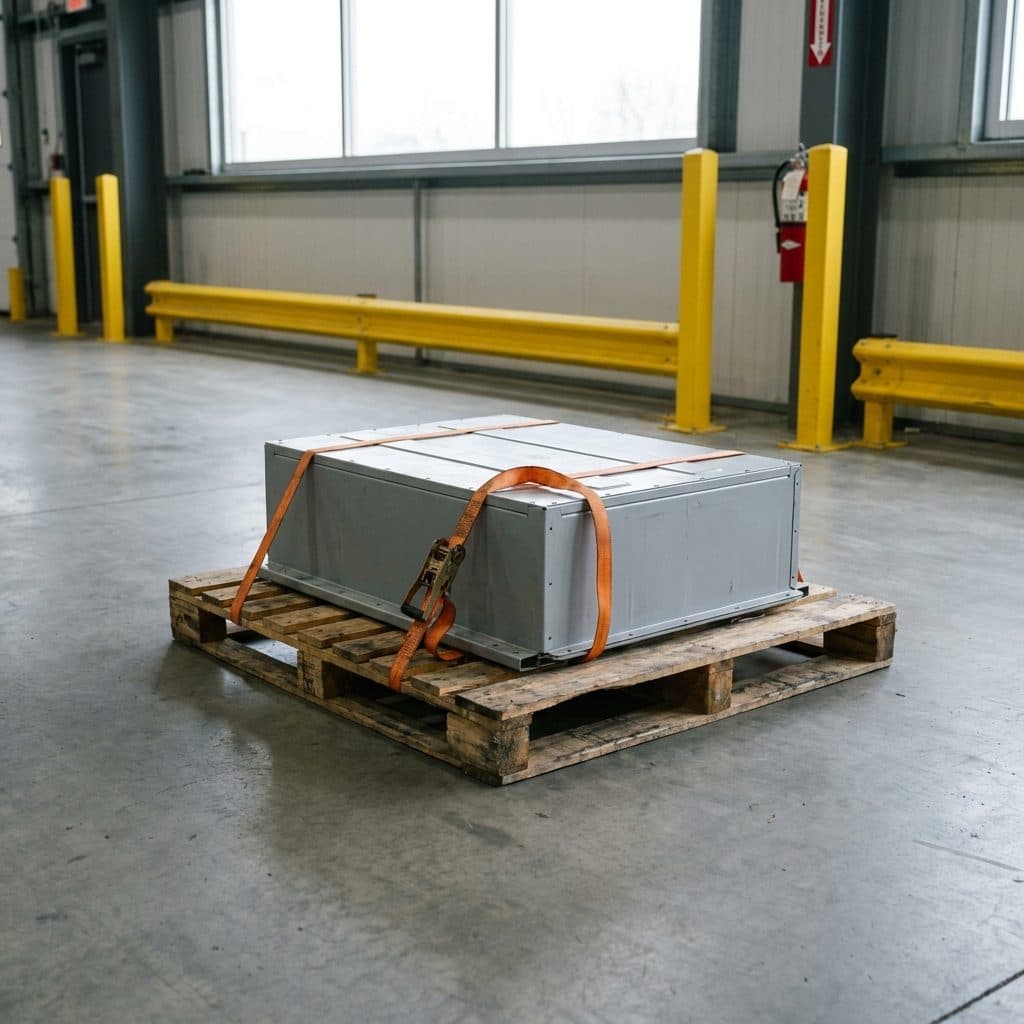
Short answer: Yes, you can buy a used hybrid or EV battery at a junkyard, and the big self-service chains put them on their price lists. On October 5, 2026, the Pick Your Part yard in Anaheim listed a hybrid battery at $222 plus a $25 core, and Pick-n-Pull in Oakland listed a hybrid or electric battery at $538.99 plus a $29.99 core. Treat it as a high-voltage part: confirm the part number, ask how it was tested, and know the shipping and safety rules before you take one home.
Last checked: October 5, 2026. Prices are from the Pick Your Part Anaheim and Pick-n-Pull Oakland price lists. The Colorado law is from leg.colorado.gov and KUNC. Salvage yard and recycling figures are from NPR. The Illinois rules are from the Illinois Pollution Control Board, docket R26-17. Shipping and disposal guidance is from PHMSA and the EPA.
What changed for EV batteries at salvage yards in 2026?
| Where | What happened | Status |
|---|---|---|
| Colorado | SB26-003 makes companies that sell EV and hybrid batteries, or cars that contain them, in the state collect certain unwanted batteries and handle them responsibly | Signed in June 2026. Landfill ban from July 1, 2029 |
| Illinois | Proposed rules for sites that store used EV batteries, with extra duties at 5,000 kilograms (11,023 pounds) or more | Hearings held March 19 and June 4, 2026. We found no final rule |
| Nationwide | Recyclers charge to take some battery types, according to NPR's July 13, 2026 report | Ongoing |
The money problem is the reason for the laws. NPR described a Massachusetts yard, Westover Salvage Yard, holding a working Tesla pack it had priced at $1,200 with no buyer. The only recycling quote it got was negative $1,800, meaning the yard would pay that much for shipping and processing. Another Massachusetts yard, Everett Auto Parts, was sending Chevy Volt batteries to a recycler for nothing, and its co-owner was glad not to pay.
Chemistry matters. NPR quoted a Benchmark Mineral Intelligence analyst putting the North American gate fee for lithium iron phosphate (LFP) batteries at about $1.50 to $2 per kilogram, while recyclers pay $2 a kilogram or more for some batteries with pricier metals. An EV pack can weigh a ton or more, so an LFP pack can cost a yard hundreds of dollars before shipping.
Colorado's law answers that by putting the duty on the battery's seller. Battery providers must register with the state by July 1, 2027, label batteries from July 1, 2029, and report each year from 2030. KUNC reported it as the first plan of its kind in the country. In Illinois, the state EPA filed its proposal on January 2, 2026, and post-hearing comments were due July 1, 2026. Illinois law gives the Board a year from the filing to adopt the rules.
Should you buy a used hybrid or EV battery from a yard?
It can make sense for an older hybrid whose pack has failed, when a new pack costs more than the car is worth. The risk is that you cannot see how worn a battery is. Check these before paying.
| Check | Why it matters |
|---|---|
| Part number and model years | A pack from a different year of the same model may not fit. Ask for an interchange |
| Why the donor car is there | Avoid packs from cars hit near the battery or flooded |
| Mileage on the donor car | More miles usually means more wear |
| Any test the yard did | Ask what was tested and keep the result with your receipt |
| Returns and warranty | Pick Your Part's Anaheim list shows no 90-day guarantee for its hybrid battery line. Ask at any yard before you pay |
| Core deposit | Both price lists above charge one. Bring the old battery back to get it refunded |
The Hollander interchange is how yards match parts across models, and our page on core charges explains the deposit. If you have never worked on a high-voltage system, buy the battery and pay a hybrid shop to fit it. For single modules instead of a whole pack, read where to find used EV battery modules.
How do you handle a high-voltage battery safely?
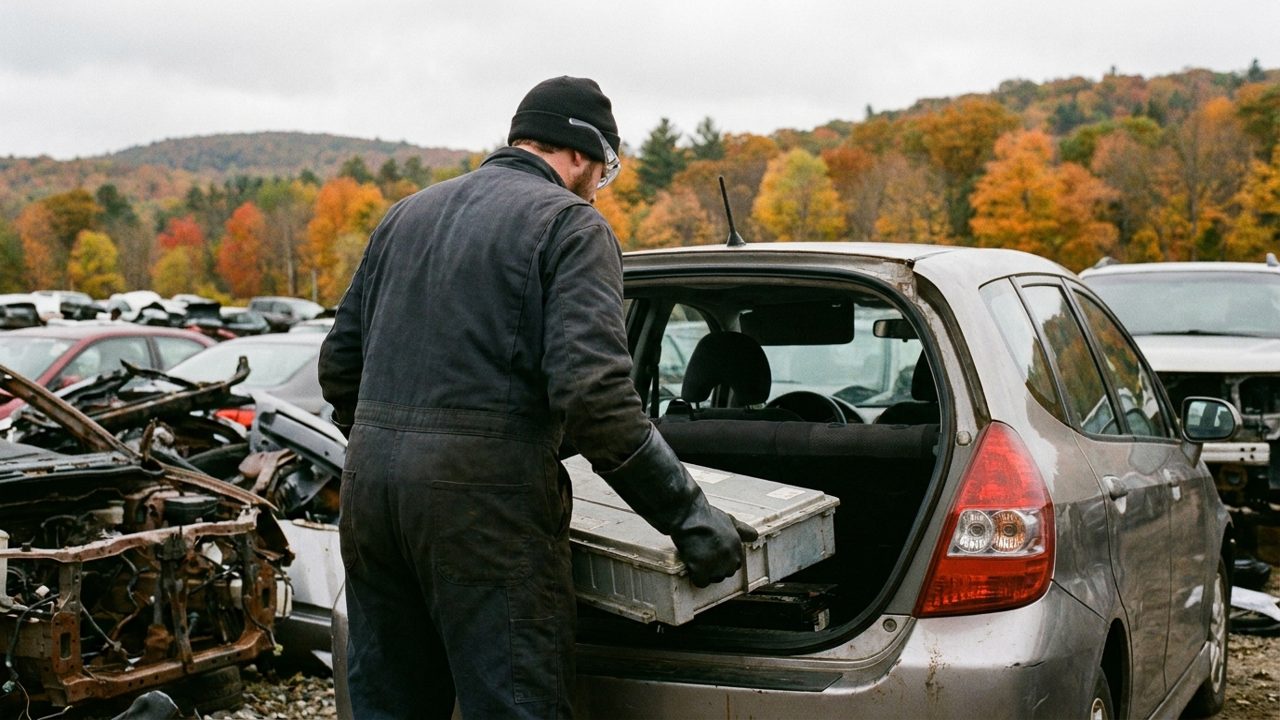
PHMSA, the federal agency for hazardous materials transport, regulates lithium batteries as hazardous materials when they are shipped. It warns that they can overheat and ignite after a short circuit or physical damage, that a fire can be hard to put out, and that thermal runaway can spread to nearby batteries.
In practice: never open, cut or puncture a pack, and never carry a damaged, swollen or leaking battery in your car. Strap a good one down and keep metal tools off the terminals. If you buy one online, the seller must ship it under the federal hazardous materials rules, which is part of why shipping costs so much. The EPA says that if a lithium-ion battery is damaged, you should contact the battery or vehicle maker for handling instructions.
A three-minute look at how one auto salvage business handles EV and hybrid batteries, from the Currents channel, published July 2024. Its description names Robertson's Auto Salvage.
Where do old EV and hybrid batteries go?
Not in the trash. The EPA says not to put a large lithium-ion battery in household trash or recycling bins, and to contact the dealer, shop or salvage yard where you bought it. Yards that charge a core deposit take the old battery back when you buy its replacement.
A pack too weak for a car may still store power for a building. Our article on EV battery second life explains how that works. For the rest of the car, see buying hybrid car parts safely and EV parts at junkyards.
Price lists vary by yard, so check the one for the yard you plan to visit. The Pick Your Part and Pick-n-Pull pages list each chain's yards, and junkyards near me finds the rest.